Another glowing review

The winter is drawing in to the Alpujarras and firewood has become a major priority.  Gaunt, shivering souls wander the villages waiving €50 notes at the locals and wailing ¿leña?, desperate to score a bag of olive logs at any price. Our latest guests didn't let it spoil their enjoyment, however, as this enthusiastic review demonstrates:

"We had such a good time - your lovely house is a credit to you...beautifully converted, and very comfortable. Juviles - well, I recall a poem by Rod McKuen (you are probably too young!) called 'Listen to the Quiet'. That says it all. It was cold (to be expected at this time of year) but bright and sunny, and we were lucky. It was a wonderful short break, and we hope to return at some stage, and won't hesitate to recommend you to everyone. I am just downloading my photos - the colours of the autumn trees were spectacular. We took 2 bags of wood for the fire, but used it the first evening, then had a few panic-stricken moments tracking more down - there was none to be had in Cadiar or even Trevelez, and no reply from the guy in the main street, but finally, a chance remark to a lady who was sweeping her path brought forth the mystical 'wood man', so for €20 we had two large-ish crates, which warmed us beautifully! Such a lovely part of the world - thank you for bringing it to us!"

New review

I've not posted for a while for one reason or another, but this excellent review from Louise Wignall of Melbourne, Australia has brought me back to the blog.  More soon now I've been goaded into action.

"Once we got over the challenge of driving on mountain roads in a left hand drive car on the right hand side of the road and actually got to Juviles the choice of this small, remote village 'on the other side of the world' from Australia was entirely worth it!

The 'La Golondrina' house was a lovely place to stay. We loved our week in the mountains-a rugged and harsh and unforgiving landscape so full of history and natural beauty.

The house is spacious and beautifully appointed with a great kitchen perfect for cooking up feasts made from locally sourced ingredients (either bought from nearby villages or from the vegetable delivery truck ).  Features we loved the most were lying in our comfortable airy bedroom enjoying the view across the rooftops through the shuttered window; sitting out on the deck at sunset shelling almonds and enjoying a drink; reading our way through the excellent collection of books about Spain on the shelves; poring over the walking guidebooks and planning our daily walks (Trevelez, Mecina Bombaron and El Fuerte de Juviles were our favourites). The walking pole in the house has travelled many kilometres I am sure with various visitors and is a valuable asset!

We were in touch with (Martin/the host) via email before our visit about how to get there and felt fully supported before and during our visit. We also used the excellent house-book containing tips about the area and recommendations that proved valuable advice.

The weekly rental fee was good value for money and we would recommend 'La Golondrina' to others wanting a secluded, peaceful and unique holiday without hesitation."

More availability

Sadly, some guests have had to cancel their trip to Spain and our house due to illness in the family.  So, unexpectedly, our property is available to rent between 23rd June and 7th July. Lovely time to visit if you fancy it...

Best-ever review?

That welcome pack worked a treat.  Just take a look at this review from Niah Richards of Manchester.  Unprompted and unedited.  And we've never met her.

We were absolutely delighted with this property.All the facilities were of the highest standard and tastefully carried out.The location was superb--the village a delight and the views out of this world--the peacefullness was exceptional .The owner was thoughtful --everything you need to know was there for you.Also he was helpful and responsive when we were making our booking.I would go again and recommend to anyone.

Nothing says 'welcome' like a pot of jam and a bottle of wine

In most of Britain - or anywhere else for that matter - you can always grab a few essentials from a corner shop or a petrol station, at any hour of the day or night. 

It's not like that in the high Alpujarra, so with the help of our lovely friend Abi from Berchules we are now supplying a modest welcome pack for guests at our house. It's enough for a snack and/or breakfast, and should tide you over until the shops (or bars) open. No additional charge.

The joy of six


Over the five or so years we've been welcoming guests to La Golondrina - a.k.a. Calle Altillo 26 - we've had parties consisting of one couple, couple plus kids, two couples, one couple and one single, two singles, three singles, a ménage-a-trois plus a couple (I like to imagine), one individual in magnificent isolation, and five ladies from Norway.

A typical set-up is three generations - this weekend we welcome a mum, grandmother and daughter - and another is the young adult couple with either his or her parents (although it's always her parents, I notice). Interestingly, different nationalities have wildly contrasting attitudes to privacy, but that's another story.

 Anyway, we've been saying we welcome up to five guests, as we have two double beds and a single. Now we've added a very comfortable bed-chair (or single sofa-bed) from Ikea to make it six. The bed-chair is in the small bedroom alongside a standard single bed, so that room could now sleep two, but it could equally be used on the first-floor landing or the trastero to make a fourth sleeping area, or moved into the biggest bedroom for a toddler who likes to sleep in the parents' room. NB:  there's also a cot thing available for babies - it's folded up in the trastero and goes up in seconds - but you have to bring your own baby.

So now our place sleeps six adults, or more if you're particularly inventive/intimate, and all at no extra cost - bringing the price per person in mid-season down to a frankly mystifying £58/€70 per week.

Snow in Juviles

Despite good snow higher up in the Sierra Nevada where the ski resort is, there hasn't been much white stuff at our altitude so far this winter.  Yesterday, though, the snow came down to meet us.
Thanks to Abi for sending me the shot.  We won't get a chance to visit our house till Easter, although we've got guests from Yorkshire arriving in a couple of weeks, who may be in time for some snow.

Under the hammer

I've just started to use a feature on Pure Holiday Homes called Bidango.  It's like eBay for accommodation - I offer a specified week in our house to the highest bidder, and there's a reserve, a closing date and a buy-it-now price. I'm just experimenting with a couple of weeks to see if there's any interest, but I suspect we're too cheap. Under this system, you could 'win' a £300 week for £200 or something, which hardly seems worth the uncertainty. (Whereas if I could get a three-grand-a-night Bond villain's lair for forty quid, I'd get quite excited by the prospect even if it was located somewhere I didn't want to go.) Mind you, on eBay people regularly pay more for useless old tat than they would for nice new stuff from John Lewis - something to do with the psychology of bidding - so it'll be interesting to see what happens.

Anyway, if you're reading my blog, I'll discount the price just for asking - at least outside of main holiday periods.  We've got about five weeks booked for 2012 at this stage - which isn't bad, as I don't think we had anything before Christmas last year - but we could do with more.  NB: I'm putting in an extra single bed, so from about March it'll sleep six. 

The best snow in Europe just now..?

Well, that might be pushing it, but while the Alps are suffering with a lack of the white stuff, our own Sierra Nevada opened this weekend with more piste (40kms) than ever before at this time of year. The season's been getting steadily longer and better since we've been coming to the Alpujarra - about eight years - during which global warming has wreaked havoc with the ski industry hundreds of miles north. Here, where you can see Africa on a clear day, no operator is going to give you a guarantee of great snow, but it's getting more dependable every year. Here's a shot from local paper Ideal, showing the first skiers to venture out this year. (They're not going to win awards for photography at Ideal, I'm afraid.) Our house is not for a single-minded skiing holiday, as it's an hour's drive to the slopes, but for a mixed trip which combines winter sports with, say, walking, visiting the Alhambra and a day on the beach, it would be perfect.
[Titulo]
This is one of the few places in the world where you really can ski in the morning and swim (comfortably) in the sea in the afternoon of the same day. If you're at our place, you're about half way between the two, as well as close to Granada and surrounded by great scenery in every direction.

Welcome Huelvans

We won't be in our lovely house in Juviles for Christmas this year, as we're going to Mexico instead. (I know it sounds extravagant, but it will be the first long-haul we've done since we embarked on restoring the house back in 2006. And we booked it months ago, when I was getting loads of work...) So we're delighted to have accepted a booking from a family from Huelva, who are arriving Christmas eve (Nochebuena) and staying till after New Year's Eve (Nochevieja). I just hope they have some idea of just how cold it can be between the Noches at an altitude of 1,250m.

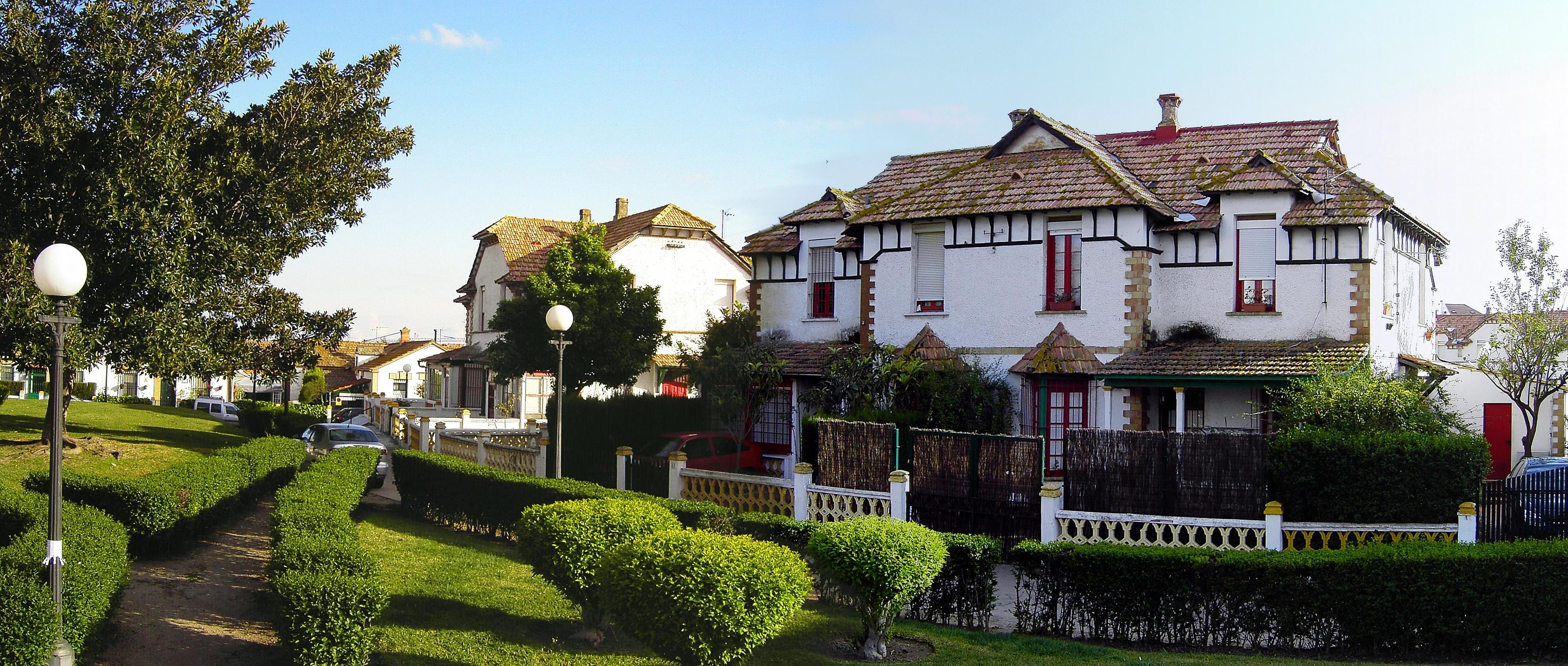
Huelva is the Andalucian province - the capital city has the same name - that butts onto Portugal, in the far West of the community. It's quite a long way for our guests to come, despite being still in the same general region - probably a six hour drive or more. An interesting city little visited by foreign tourists, Huelva was heavily influenced by the British industrialists of the Rio Tinto mining concern in the late 19th century. Amongst other achievement, the Brits founded the first football club in Spain here - Recreativo de Huelva is still the oldest professional team in the country - and built a remarkable garden suburb reminiscent of Port Sunlight or Letchworth. Here's a shot of a typical street in Barrio Reina Victoria - or Queen Victoria District - it's only the Spanish street lights that give it away. What was home-from-home for British mining engineers in the 1890s is now a predictably gentrified corner of a modern Spanish city.

File:Barrio Obrero Huelva.jpg

Meat is murder. Tasty, tasty murder.

I'm linking here to a blog entry about being a vegetarian in Andalusia. There's no disguising the fact that it's tough. I eat meat, and love it, but even I find the ubiquity of pig flesh round these parts a bit much at times. There's no problem if you're self-catering in a lovely property like ours, with a nice big fridge, excellent cooking facilities and some decent chef's knives (not something you can bet on in the average holiday rental). The availability of wonderful fruit and veg, delicious fresh eggs and an excellent variety of pulses, nuts and dairy make meat-free cooking easier even than in Northern Europe. The problems start when you eat out, and for most visitors, eating out is a major element of a holiday.


The problem is that barring a few classic dishes like pisto (something like ratatouille) and pimientos de padrón (fried baby peppers, above), Spaniards assume that the addition of a little meat or fish is necessarily an improvement to anything, for everyone. So although soups, tortillas and salads may look harmless and veggie-friendly on paper, there's always a high likelihood that some ham or tuna will be strewn over the top, or some meat-and-bone-based stock will have made its way in at an early stage of preparation. It doesn't even always help if you say you don't eat meat: "no como carne" means "I don't eat meat", but to an Andalusian it kind of means "I don't want a rare steak right this moment". They won't think you mean ham, or black pudding, or pork fat.

Then there are tapas, without which a visit to Spain would be unthinkable to many, including those who reject animal flesh. In most provinces of the country, you pay for and specify what you want when you get tapas. Not in these parts. Here in Granada they're free with your drink, and you get what you're given. It might be snails, it could be cod, but the chances are it'll be something that used to be part of a pig.

All is not lost, though, meat-dodgers. Every bar will have some cheese, olives, eggs. And they'll be happy to give you a tapa without meat. I suggest you learn how to say you'd like a cheese or egg tapa - la tapilla ¿puede ser de queso? should do it - and remember that you have to specify it as you order your beer or wine. Otherwise it'll be too late, and it'll be black pudding.


Pure dead brilliant?

Just renewed our listing on PURE Holiday Homes' website. The house has been there for a year and we haven't had so much as a single enquiry from it, but they dropped the price to about £30 in a desperate attempt to get us to stay on. The site looks great and I think it's potentially useful, but like all the rest it's aimed squarely at mainstream resort-style holiday homes rather than places like ours - a proper house in a real community. There's no means on the site to search for the Alpujarra or Granada, for example. Just 'Rural Andalucia'... which hardly narrows it down.

Anybody know of a website for people who are looking for a genuine unspoilt rural experience, rather than a kiddy-on resort holiday? Let me know.

Looks like we'll miss the figs this year

I'm extremely disappointed. We have to call off a planned visit to Juviles for a week from October 15th, which is the half-term holiday in Glasgow, and this means we're unlikely to get there again until Easter next year. This is a wonderful season in the Alpujarra. This time last year we enjoyed some fantastic walks, saw lots of interesting wildlife and, amongst other pleasures, ate lots of free figs and chestnuts.

So, our house is unexpectedly available to rent. As it's short notice, we'd accept a reasonable offer for rent. Get in touch if you fancy it. Oh, and as the English half-term is coming up soon, together with a few Spanish puentes, now's the time to book for later in the month too.

All the tweets you can handle

Black Redstart
The Alpujarra and the Sierra Nevada are amongst the richest areas in Europe for birdlife. I'm certainly no expert, but there are loads of species which seem to be pretty common here compared to anywhere else, including the black redstart (that's one above), crested lark, golden oriole, griffon vulture, Bonnelli's eagle, hoopoe, bee-eater, rock bunting, alpine accentor and dozens more, including a wide variety of owls, which I tend to hear rather than see. The photograph above is from this fantastic website from Birdwatch Alpujarras, a specialist company based in Lanjarón. The site promotes their services to visiting ornithologists, but is also of great interest to the casual visitor who sees an unfamiliar bird round these parts and wonders what it might be, or who wants to know what to look out for on a walk. Personally, I just love the abundance and proximity of even fairly common birds in and around our village. The resident swallows, for example, raise several broods in a year, so we'll often see ten or more scruffy little fledglings lined up on the telephone wire immediately outside our window, screaming to be fed. The adults' complex call starts with a melodious trill, then morphs into a rattling metallic cackle - it reminds me of the sound the old dial-up modems used to make - and in summer, with the windows open, it makes owning an alarm clock entirely unnecessary. Here's a shot of a little one taken through the slats of our bedroom window blind - hence the odd diffused light.

Stein squeezes us in

I'm hardly a fan, but Rick Stein's series on Spanish food has at least taken in some beautiful locations and great dishes. Last night in Extremadura he helped himself to some guy's migas in a shed on an allotment in Trujillo, and was treated to ajo blanco by the Duchess of somewhere or other in a stunning aristocratic dehesa - a hunting estate complete with stags, wild boar and cork-oaks. Then crossing into Andalusia and arriving in Seville, he claimed to have accidentally stumbled upon El Rinconcillo - the oldest and most famous tapas bar in the city, a fixture in every guide book and travel article on Seville ever printed, and in my limited experience (I've only been once), very disappointing. To be fair it's not Stein or his cooking that annoys me, but the tired and desperate efforts to make the whole thing more engaging by having him drive an old camper van (alone but for a crew of maybe thirty people), having him 'help' with the saffron harvest or whatever, mugging to camera at every opportunity and mispronouncing everything. And all with the most appalling background music. For contrast, check out The Good Cook with Simon Hopkinson on BBC1 at the moment.
No novelty form of transport, no pretending to be best friends with the fishmonger, no groups of implausibly attractive friends round for brunch. Just Simon Hopkinson making five great dishes per episode; simple, honest and brilliant.

Anyway, just when you thought it was over, Stein found ten minutes to visit Chris and Anne Stewart of Driving Over Lemons fame, down our way in the Alpujarra Granadina. The Stewarts live on a cortijo in the river valley at (I think) Barranco de la Sangre, not far from Orgiva. They served Stein some not-very-good-looking tabbouleh (which isn't Spanish, let alone Alpujarran) and a kind of wild boar tagine which probably tasted great, but which looked terrible on the telly. Stein drove a LandRover along a dirt track (the camper van wasn't up to it), but other than that, and the Stewart's terrace, you didn't see anything of what's probably the most beautiful region in Southern Spain. He kept going on about how remote and difficult it was to get to - so after making the effort, you'd think they'd have shot a bit more footage.

The only time I've bumped into Chris Stewart, he didn't have a parrot on his head. It was in the Pizzeria in Capileira, a restaurant which despite its name does much more than pizza, including fabulous boar and extraordinary wild asparagus with scrambled egg. I'd recommend it highly - along with the rest of the eating places in that pretty, busy little village.

So many tapas, so little time

We stopped in the beautiful, atmospheric little town of Alhama de Granada while coming home from the Alpujarra at the end of last week, and what a pleasure that was. Built above a spectacular gorge, it's the site of natural hot springs which give the town its name -'Alhama' coming from the same root as 'Hammam' (what we'd call a Turkish bath). It wasn't the Moors who started the bathing though; the Romans, who loved a good scrub, developed the place as a thermal spa well before the Muslims got there, and pre-Roman populations had already settled centuries before, presumably attracted by all that free hot water. The air temperature was already about 32 C last Friday, though, so we didn't see the attraction of warming up further. Must go back in winter.

About 40 minutes from Granada city (and an hour and a half from our place), Alhama is the main town in the southern part of the Poniente region, not far from the border with Malaga. With about 6,000 residents it's hardly a metropolis, but it has a big-city, dressed-up feel to it of a weekend evening - at least in comparison to the Alpujarra, which we'd just left behind us. It's an odd mix of seeming affluence (lots of beautifully kept and restored buildings, well-dressed locals, smart cars on the street) and picturesque decay (many elegant old houses and churches are abandoned and falling down, as are the beautiful flour mills in the gorge below).

Alhama has one of the best tapas circuits I've personally encountered - and that's saying something. As in the rest of Granada, your tapa comes free with a glass of beer or wine, and sometimes with a soft drink. Unlike most other places in the province, they'll often give you a choice when you order. Reportedly 38 bars are to be found here, and over two nights we managed ten or twelve , most of them around the central Plaza de la Constitución. I can remember salmorejo (thick gazpacho), aubergine fritters with honey, huge prawns served both hot and cold, fillets of sea bass on skewers, pinchitos (of course), excellent hot miniature roscas (like filled bagles), mackerel on toast, black pudding (of course), chorizo, cheeses, pisto (like ratatouille), ham, miniature omelettes and, most satisfying of all, a pile of shredded hot roast pork on some lovely fresh bread, with olives and pickled garlic on the side. Each of these was served free with a drink costing between one and two euros. Most impressive was the consistency - while none of the bars was quite up to the standard of the very best in Granada (such as Cunini or Las Castañas) - there wasn't a single duffer either. Even the perfunctory slice of cheese on bread was, well, good cheese on fresh bread.

The bars were busy with locals out grazing each evening (Granadans often skip a proper dinner, for obvious reasons), but the town was unaccountably devoid of foreign visitors. It's only an hour or so from Malaga and the surrounding resorts, and would make a great stop on a circuit of the big cities, so I don't know why. But it's one of the delights of Spain that you can find these exquisite little places - others I can think of are Priego or Osuna in Andalusia, Caceres, Vic and Tudela elsewhere, but there are hundreds - and if you're lucky you can turn up for a night's stay and have them almost to yourself. If these towns were in Italy they'd be packed with hoards of tourists being herded from church to ruin to palazzo and shown what to take photographs of by multi-lingual tour guides. None of that in Spain.

We stayed at Casa Sonrisa, an aristocratic old house converted into a slightly eccentric, antique-filled hotel. Sixty euros a night for the two of us, including breakfast. Deserves to be much busier.

43 degrees in Malaga

I've never understood why Malaga city isn't better known to Northern Europeans. Millions of us fly into its massive airport every year, but we all seem to head a few miles west to the province's overdeveloped resorts, or maybe drive off in hire cars to somewhere perceived as more interesting, like ummm... the Alpujarra. Yet Malaga has masses of charm. Where Seville is authentically gritty and Granada is all about the romance of history, Malaga is a big, blowsy strumpet of a place packed with elegant 19th and early 20th century buildings, fantastic bars, good shopping and excellent city beaches. Young Malagueños and Malagueñas are a good-looking body-conscious lot, given to posing around the pedestrianised streets of an evening and giving the place a distinctly party feel. As the birthplace of the 20th century's most significant artist, Malaga has a great museum dedicated to Picasso's works (the best stuff may be in Paris, Madrid and New York, but he was so prolific that there always seems to be enough to fill another Picasso Museum when someone feels like opening one. Why should his home town miss out?) There's also the great man's birthplace, and the brand new Carmen Thyssen Museum - I've not had a chance to visit yet, but I believe it has an impressive collection of mostly modern Spanish art including Miró and Tapíes as well as, yes, Picasso again.

Anyway, we called in to the city yesterday for a great lunch of gazpacho and pescaito frito - mixed fried fish in the lightest imaginable batter. It's more like Japanese tempura than cod from the chippy, which is just as well as the temperature in the city centre was 43 degrees - 109 if, like me, you prefer to think of high temperatures in Fahrenheit.

They're adept at decorating the streets in Malaga, and their ingenuity stretches to lovely cooling canopies over the main drag, Larios, and some of the neighbouring calles and plazas. Even in the shade, though, it was v. hot.

If you're planning to visit our place in Juviles, you might like to know that with the fast-improving coastal motorway you can get from Malaga airport to our door in about 2 hours and 15 minutes. (OK, that's my best time so far, but it is feasible.) I would, however, recommend a night out in Malaga on the way to or from our place. The sophisticated urbanity of this great city is quite a contrast to the bucolic charms or our tiny village, and a quick fix of glamour is well worth a slight detour.


Chicken in almond sauce

I was asked for a typical Alpujarran recipe for a website the other day. Now the ultimate local dish is probably the plato Alpujarreño, which is great, but it's not unlike a British breakfast and sounds less impressive than it really is. Then there's migas, a kind of grainy semolina porridge which comes out rather like uneven couscous - again it's one of those hearty local dishes that doesn't really travel that well. So I made up a user-friendly recipe for chicken in almond sauce instead - I'm not sure if it's precisely authentic, but with great handfuls of almonds and garlic, lashings of olive oil and wine, plus pimentón and cumin, it should be close enough; and the results were delicious. This almond sauce is also great with meatballs - albóndigas - and of course with pork for carne en salsa.Ingredients to serve at least four people:

1 chicken, jointed, skin on, or a mixture of thighs and drumsticks sufficient to provide two or three pieces per person.
100 grams raw almonds, preferably with the skins still on.
300 mls white wine
Chicken stock or water, as necessary
1 head of garlic, cut in half horizontally
1 onion, peeled but kept whole
2 large tomatoes
2 or 3 slices from a baguette or similar white loaf, preferably slightly stale
Olive oil
Flour
A good pinch of saffron threads
1 tsp ground cummin
1 tsp of hot and 2 tsp mild smoked paprika (or adjust to your taste)
2 bay leaves
Salt and pepper

1. Brown the chicken on all sides in a non-stick pan, in batches, adding more olive oil when necessary. Transfer to a flame-proof casserole dish.

2. Add the wine and bring to the boil, then reduce the heat to a simmer, add the 'bottom' half of the un-peeled garlic (it should stay in one piece), the tomatoes, bay leaves, paprika, cummin and saffron. Add stock or water to just cover and simmer for half an hour to 40 minutes, with the lid on.

3. In the same oil you used to fry the chicken, brown the almonds, making sure they don't burn. Peel the 'top' half of the garlic and add the peeled half-cloves to the pan, frying until just golden. Fry the slices of bread until golden. Put the browned almonds, garlic and bread into a pestle and mortar (or a food processor) and pound (or blend) to a thick paste.

4. When the chicken is just cooked, use a slotted spoon to lift the tomatoes and onion from the casserole and add these to the almond mixture. Lift out the half-head of garlic, squeeze the cloves from the skin and add these. Continue to pound or blend until you have a thick sauce.

5. Return the sauce to the chicken and its juices in the casserole dish, stir to blend in, and cook for another 10 minutes or so. Add a little water or stock if the sauce is becoming too thick. Check for seasoning and, if you have it, sprinkle a little chopped parsley over the top.

Serve with fried or roast potatoes. Good with the rough local rosé known as costa, or manzanilla sherry, which has a great affinity with almonds.

Great walks in Sierra Nevada

I just found this really helpful site that has detailed descriptions of walks in the Alpujarra and the wider area of the Sierra Nevada Parque Natural.

Alpujarra from the sky

Just found this clip of Andalucia es de Cine on Youtube - the show is a travelogue filler which appears on Spanish telly at odd times of the day and night. This particular clip is aerial photography of our area - the eastern Granadan Alpujarra. Shot during almond-blossom time.

See the footage here.

That amazing voice-over! Three packs of Ducados a day for several decades.